
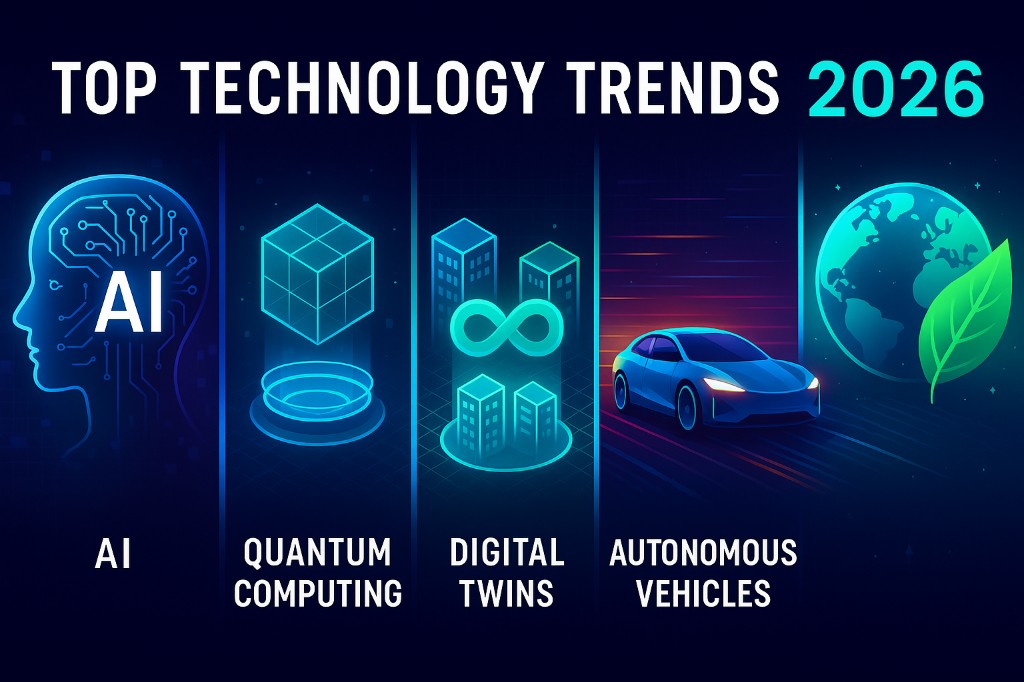
As we progress through 2026, the technological landscape continues to evolve at an unprecedented pace, introducing innovations that are redefining industries and daily life. Staying informed about these developments is crucial for businesses and individuals aiming to remain competitive and relevant.
1. Agentic AI: Autonomous Decision-Making Systems
Agentic AI refers to artificial intelligence systems capable of making independent decisions and executing tasks without human intervention. Unlike traditional AI, which relies on predefined instructions, agentic AI can plan, learn, and adapt, leading to more efficient and dynamic operations across various sectors. This advancement is particularly impactful in areas such as customer service, logistics, and software development, where automation can significantly enhance productivity and responsiveness.
2. Sustainability as a Core Business Strategy
In 2026, sustainability has transcended from a peripheral concern to a central component of business strategy. Companies are now integrating eco-friendly practices into their core operations, recognizing that environmental responsibility can drive innovation and open new market opportunities. This shift includes designing products for longevity, adopting renewable energy sources, and implementing circular economy principles to reduce waste.
3. Quantum Computing: Unlocking New Computational Frontiers
Quantum computing is poised to revolutionize industries by solving complex problems that are currently beyond the reach of classical computers. With the potential to accelerate research in pharmaceuticals, materials science, and cryptography, quantum computers operate on principles of quantum mechanics, enabling them to process vast amounts of data simultaneously. While still in development, advancements in quantum technology are expected to have a profound impact shortly.
4. Extended Reality (XR): Merging Physical and Digital Worlds
Extended Reality, encompassing Virtual Reality (VR), Augmented Reality (AR), and Mixed Reality (MR), is creating immersive experiences that blend the physical and digital realms. XR technologies are increasingly utilized for training, remote work, and entertainment, offering interactive and engaging environments that enhance learning and collaboration. This integration is transforming how we interact with digital content and one another.
5. Cybersecurity in the Age of AI
As AI becomes deeply integrated into business operations, cybersecurity has never been more critical. AI-driven systems face new threat forms, including adversarial attacks and data poisoning. Organizations are investing in advanced security protocols and AI-specific defenses to protect sensitive information and maintain trust in an era where data breaches can have significant financial and reputational impacts.
6. 6G Networks: The Next Frontier in Connectivity
Though 5G networks are still expanding globally, 6G research promises even faster data speeds, lower latency, and more reliable connections. Anticipated applications include holographic communication, autonomous vehicle coordination, and real-time remote surgeries. This next-generation wireless technology will redefine connectivity and enable new possibilities.
7. AI-Driven Drug Discovery and Biotechnology
AI is transforming biotechnology by accelerating drug discovery and supporting personalized medicine. AI algorithms analyze vast datasets to identify candidate drugs, predict patient responses, and optimize clinical trials. This approach shortens development timelines while enhancing treatment precision and outcomes.
8. Autonomous Vehicles and Smart Transportation
Autonomous vehicles promise to revolutionize transportation by reducing accidents, improving traffic flow, and lowering emissions. Breakthroughs in AI, machine learning, and sensors brought self-driving cars closer to mainstream use in 2026. Smart transportation systems optimize traffic and route management to improve urban mobility.
9. Biotechnology and Synthetic Biology
Scientific advancements in gene editing and synthetic biology enable designing organisms with novel properties. Applications range from agriculture to energy production and medical treatments, addressing challenges like food security, sustainable energy, and disease prevention.
10. Digital Twins and Industrial IoT
Digital twins—virtual replicas of physical systems—work alongside Industrial IoT to simulate real-world operations, enabling predictive maintenance and performance optimization. This tech reduces downtime and enhances efficiency in manufacturing and other industrial sectors.
Conclusion
The technological advancements of 2026 are redefining how we live, work, and connect. Embracing these trends will be essential for organizations and individuals looking to thrive in this fast-paced, digital age.